All course material (source code of this document, Python code for all figures, etc.) is made publicly available on GitHub and shared under the Apache-2.0 license.
Please feel free to submit pull requests to fix typos or add content! If you want to discuss something that is not clear, please open an issue.
Introduction
Important
The production of this document would be impossible without these (and many more) great open-source software products: VS Code, Quarto, Pandoc, LaTeX, Jupyter Notebook, Python, schemdraw, Numpy, Matplotlib, Pandas, Git, …
1.1 How Small Is a Nanometer?
How Small Is a Nanometer?
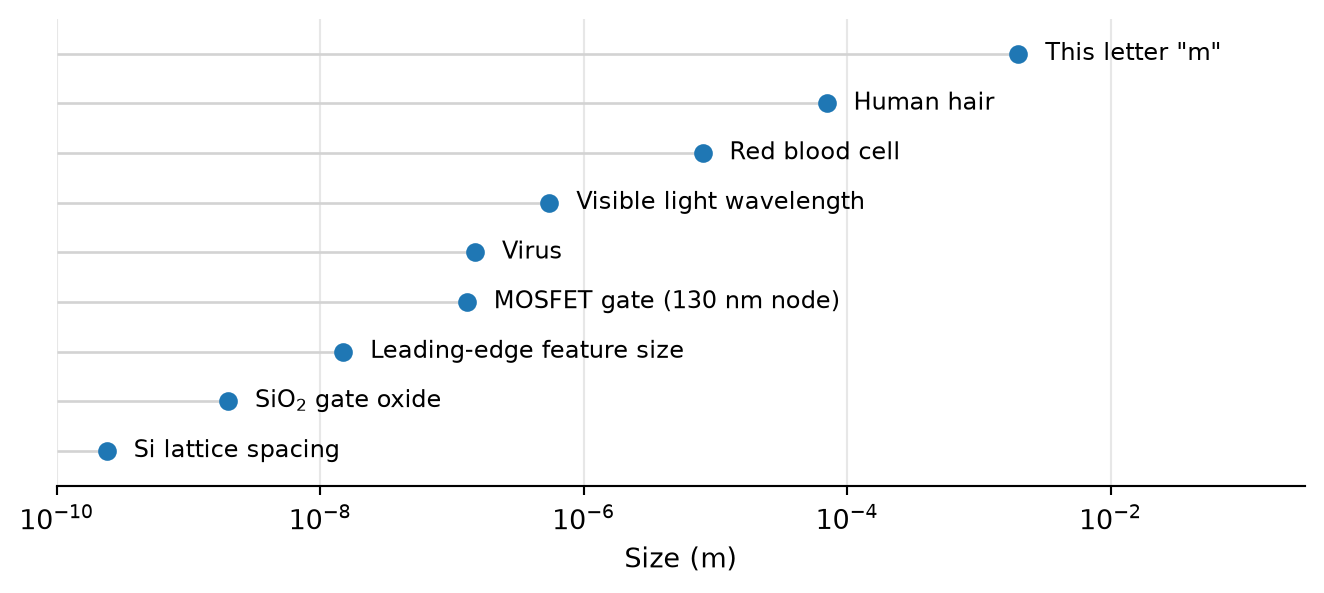
Figure 1: Length scales of integrated-circuit structures compared to familiar objects, on a logarithmic axis.
1.2 A Brief History of Semiconductors
A Brief History of Semiconductors
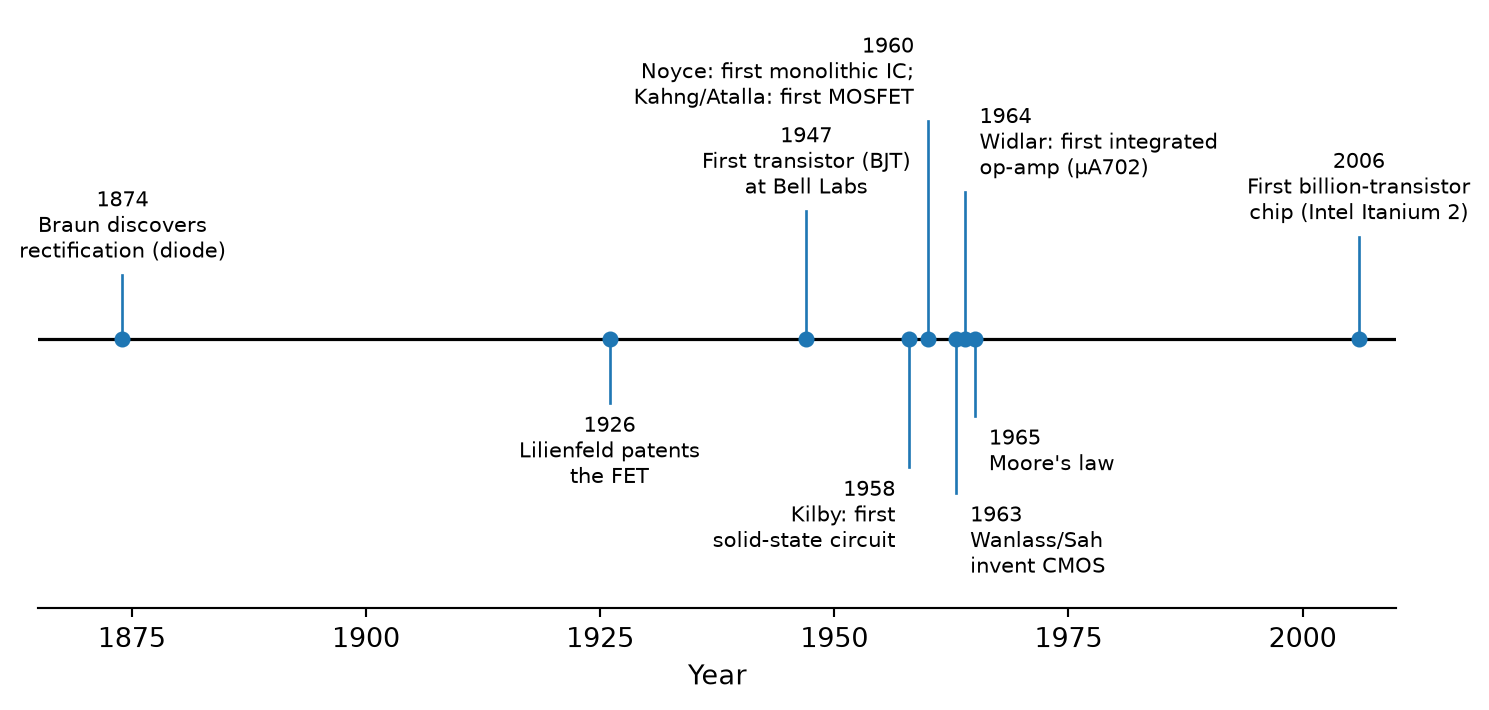
Figure 2: Timeline of key milestones in semiconductor history.
A Brief History of Semiconductors
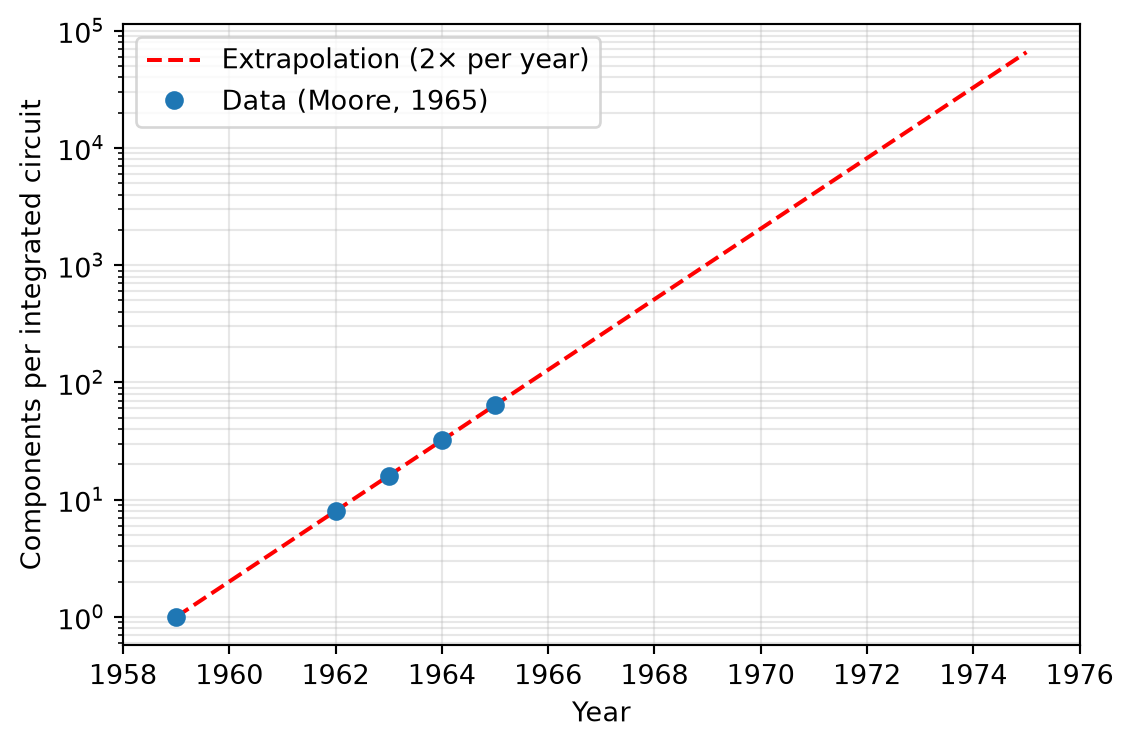
Figure 3: Moore’s law: the number of components per integrated circuit versus time.
References
Moore, Gordon E. 1965. “Cramming More Components onto Integrated Circuits.”Electronics 38 (8): 114–17.
Sugibayashi, T., I. Naritake, S. Utsugi, et al. 1995. “A 1-GbDRAM for File Applications.”IEEE Journal of Solid-State Circuits 30 (11): 1277–80. https://doi.org/10.1109/4.475716.
Wanlass, Frank M., and Chih-Tang Sah. 1963. “Nanowatt Logic Using Field-Effect Metal-Oxide Semiconductor Triodes.”IEEE International Solid-State Circuits Conference (ISSCC), Digest of Technical Papers, 32–33.